Available
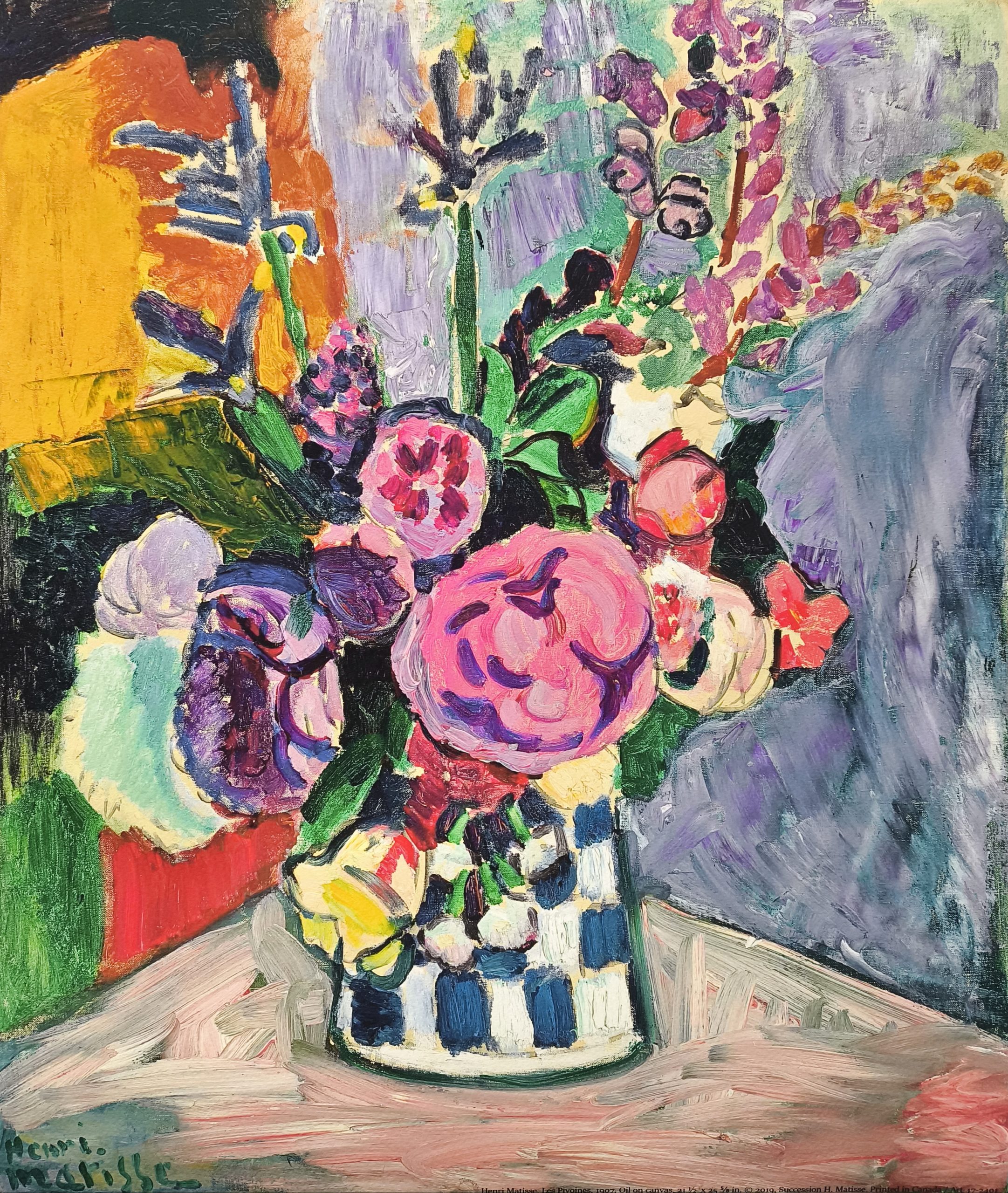
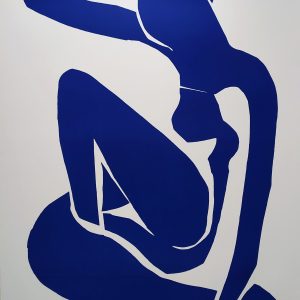
Giclée print on heavyweight smooth matte paper, 100% cotton, acid-free (approx. 300gsm – refers to paper thickness/density).
Year: 2019
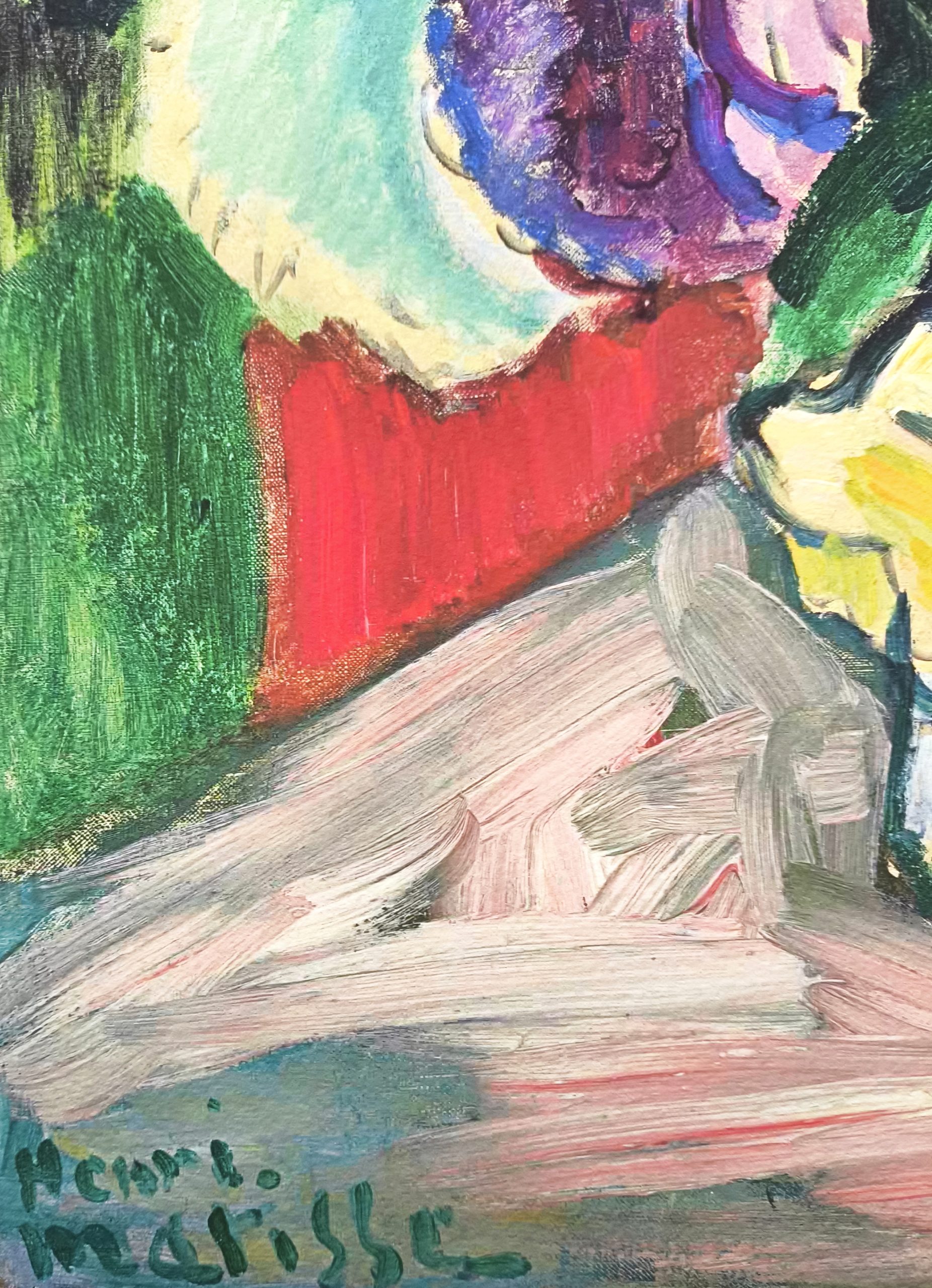
Signed in the plate.
© Succession H.Matisse.
Condition: excellent,. Never framed, never exposed.
Size: 42,5 x 50,5cm.
Henri Matisse (1869–1954) is one of the most influential and widely collected artists of the 20th century, a central figure of modern art whose work reshaped the relationship between color, form and emotional expression. As the leading force behind Fauvism, Matisse developed a bold, luminous palette and a highly decorative approach that bridged fine art, interior design and modern living spaces. His works consistently achieve strong results on the international art market, with paintings, drawings and graphic works in constant demand among collectors of modern, post-impressionist and decorative art.
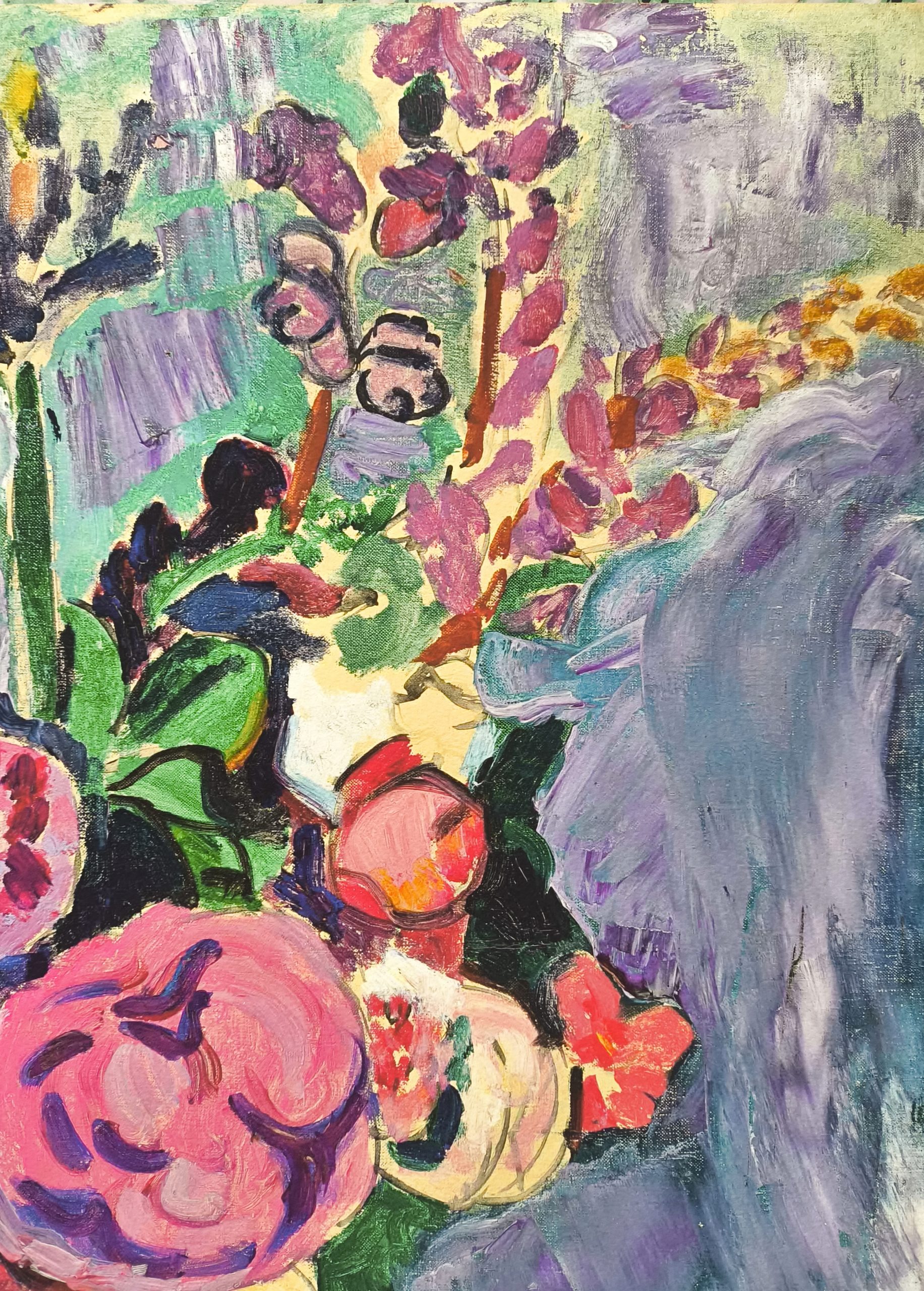
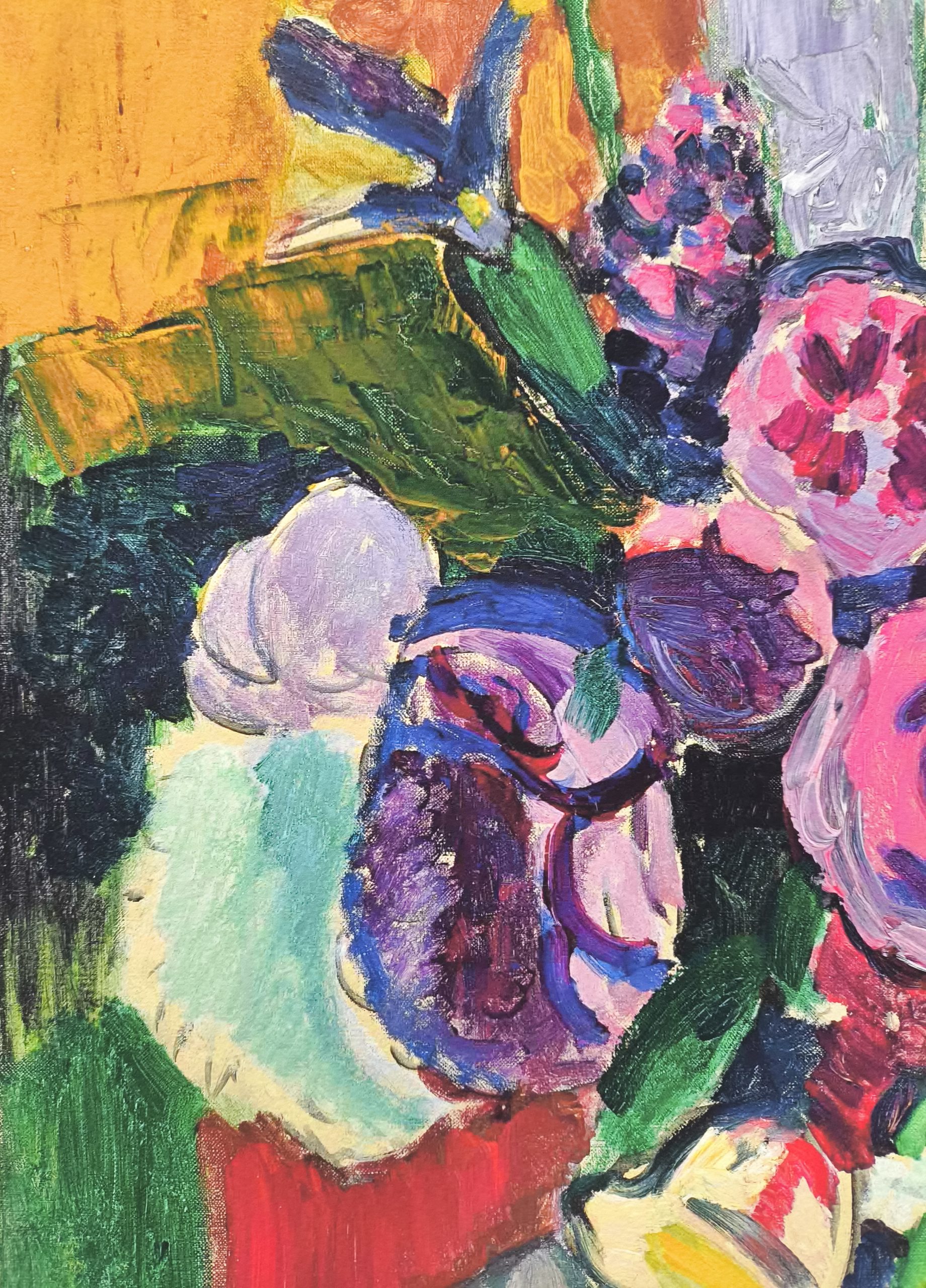
Created in 1907, Les Pivoines belongs to Matisse’s early Fauvist period, a moment when color became the primary vehicle of structure and mood. The composition transforms a traditional still life into a vibrant orchestration of expressive brushwork and intense chromatic contrasts. The peonies are rendered with thick, energetic strokes, dissolving naturalistic detail in favor of rhythm, movement and surface vitality. This approach anticipates Matisse’s later decorative interiors and floral themes, making Les Pivoines both historically important and visually powerful.
From a market and interior-design perspective, Les Pivoines resonates strongly with those interested in modern décor, color-driven interiors, chic styling, mid-century inspiration and curated contemporary living spaces. Matisse is frequently collected and searched alongside artists such as Pablo Picasso, Pierre Bonnard, André Derain, Joan Miró and Wassily Kandinsky, while also appealing to buyers drawn to later icons like Mark Rothko, David Hockney, Andy Warhol, Jean-Michel Basquiat and even contemporary names such as Banksy or Jeff Koons. His work integrates seamlessly into design-focused environments, art-driven homes, galleries, boutique interiors and modern architecture contexts.
Les Pivoines exemplifies why Henri Matisse remains a cornerstone of modern art collecting: it combines early avant-garde innovation, strong decorative presence and enduring market appeal. The work stands as a timeless reference for those seeking pieces that connect fine art history with interior design trends, color theory and modern lifestyle aesthetics.
* Please note that the colors of the item may vary slightly from the images shown, due to the type of camera and lighting conditions used when photographing the piece, as well as the calibration or type of screen from which this website is viewed.
* For customers residing within the European Union: the price shown includes the Value Added Tax (VAT) applicable in the EU country of destination, in accordance with Royal Decree-Law 7/2021, of April 27, regarding the One-Stop Shop (OSS) regime for distance sales to end consumers in the EU.
*For customers residing outside the European Union/Customs Union, please, taking into account that the order will be subject to additional taxes, customs duties, or import charges upon arrival in the destination country, that we cannot calculate from Spain and must be covered by the buyer. They are typically handled by the courier or the local customs authority.
*All images contained on this website are the copyrighted property of Vereness or their respective copyright holders. All rights reserved.