Available
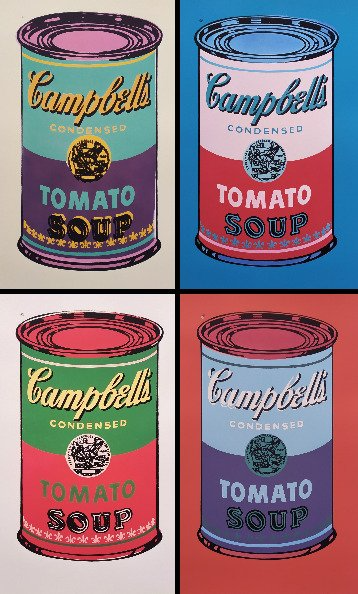
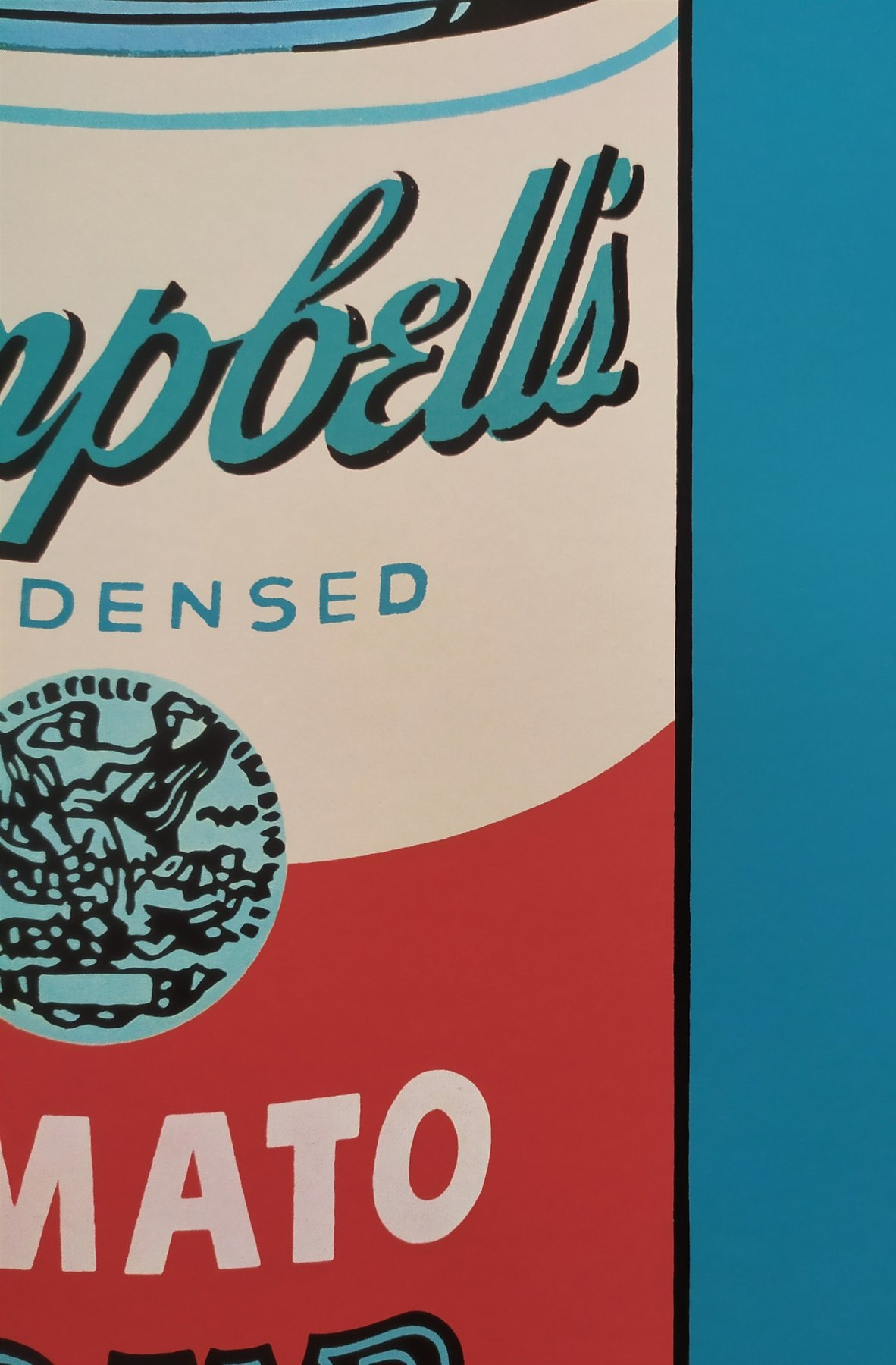
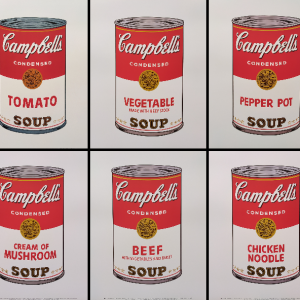
Four art prints on heavyweight smooth matte paper (approx. 250gsm – refers to paper thickness/density).
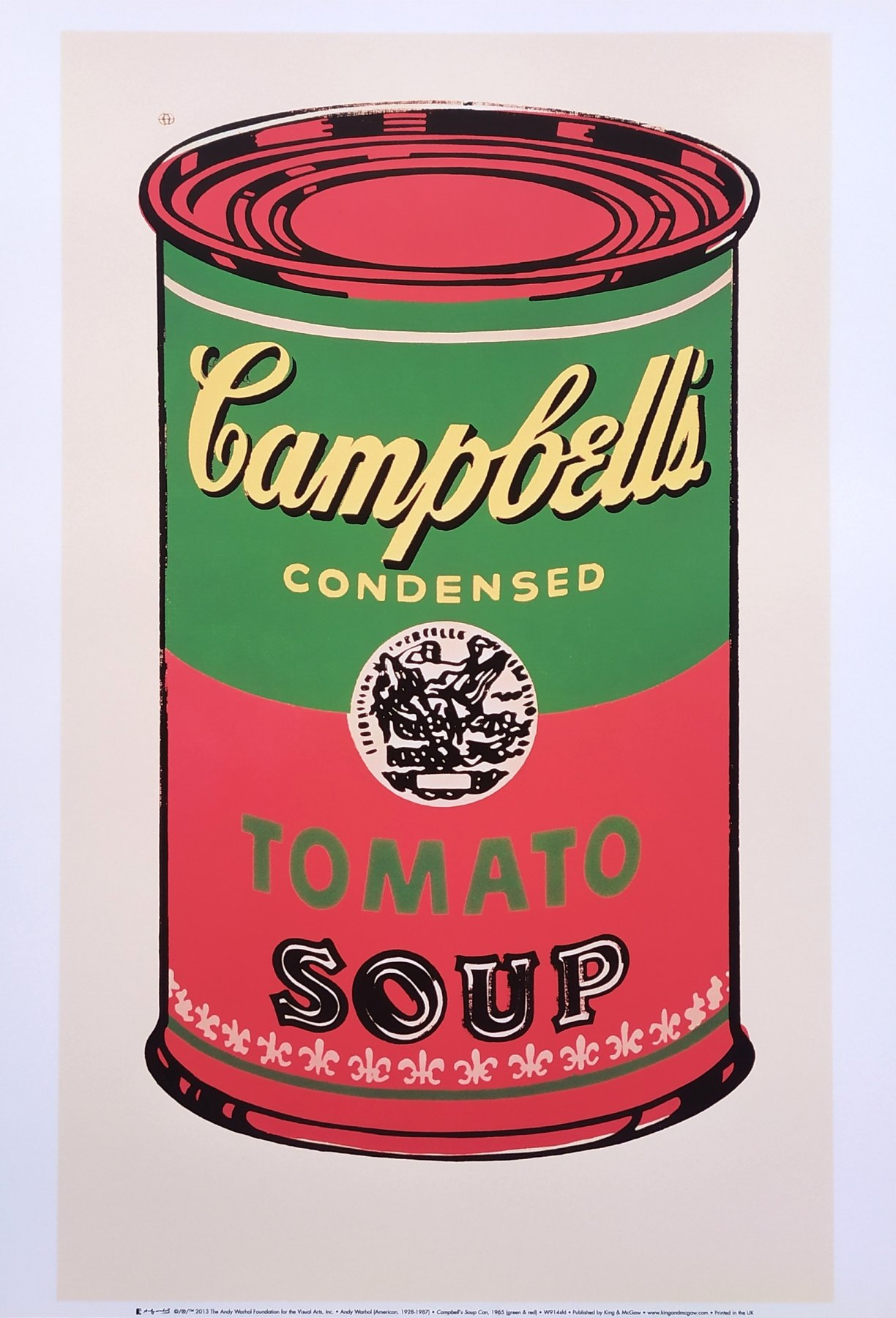
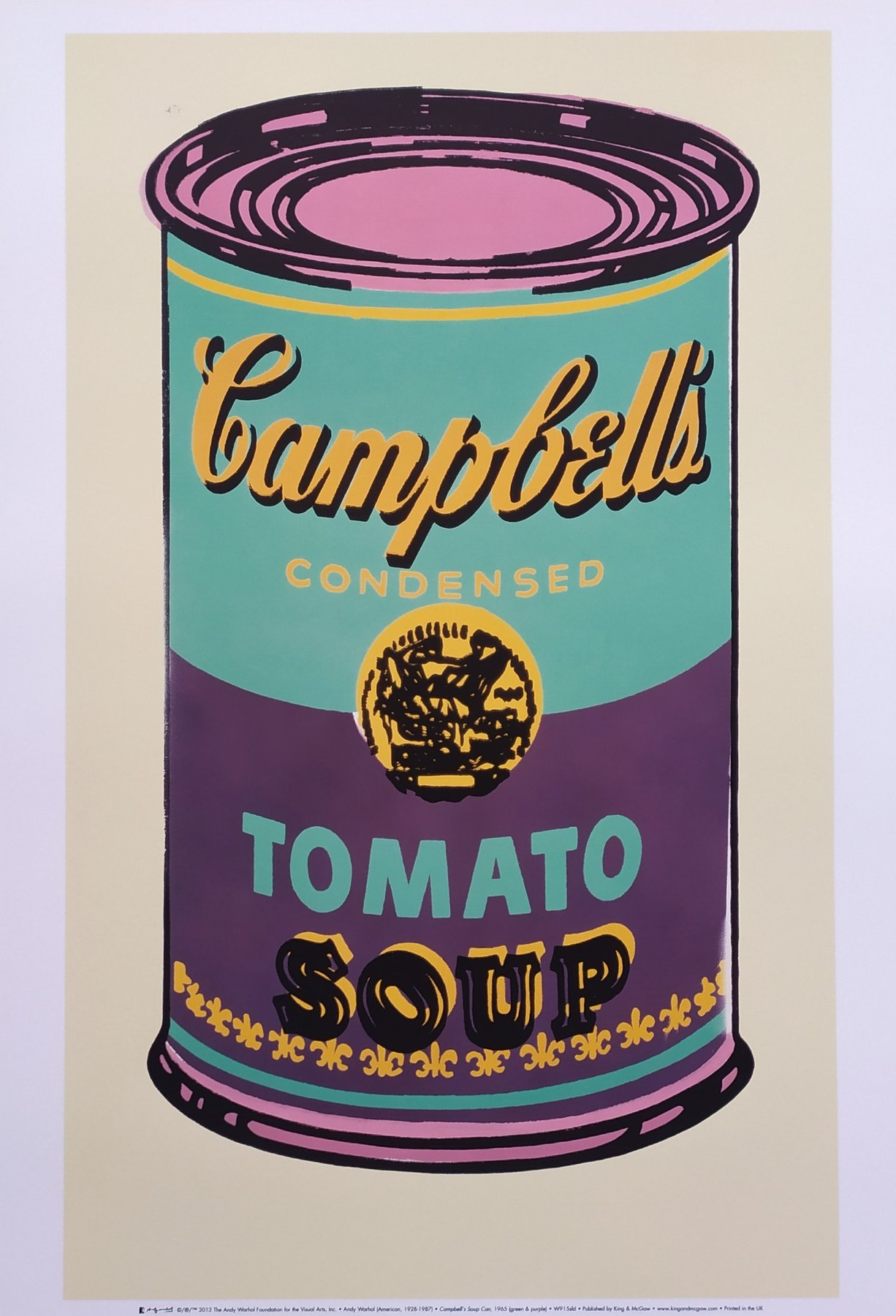
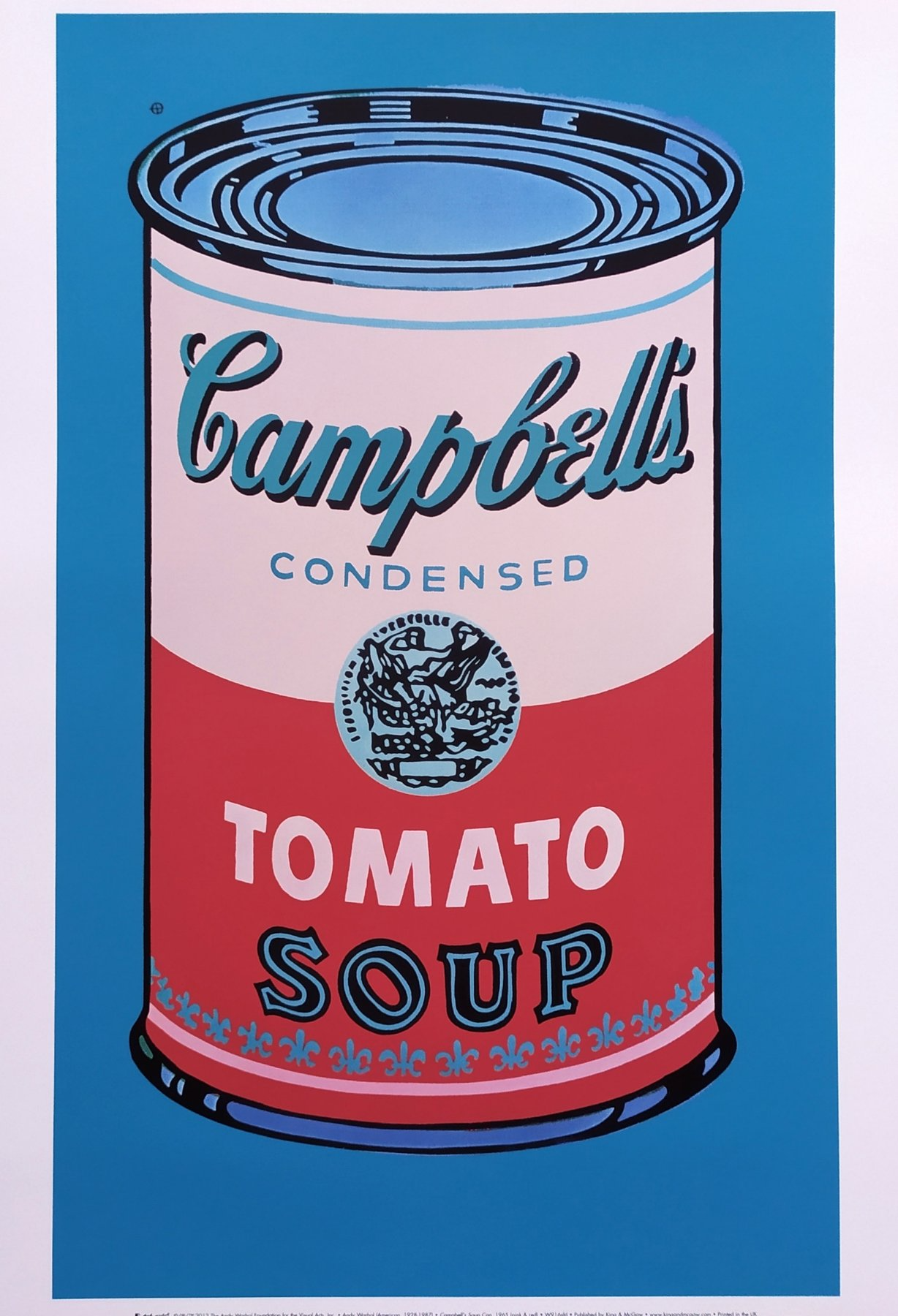
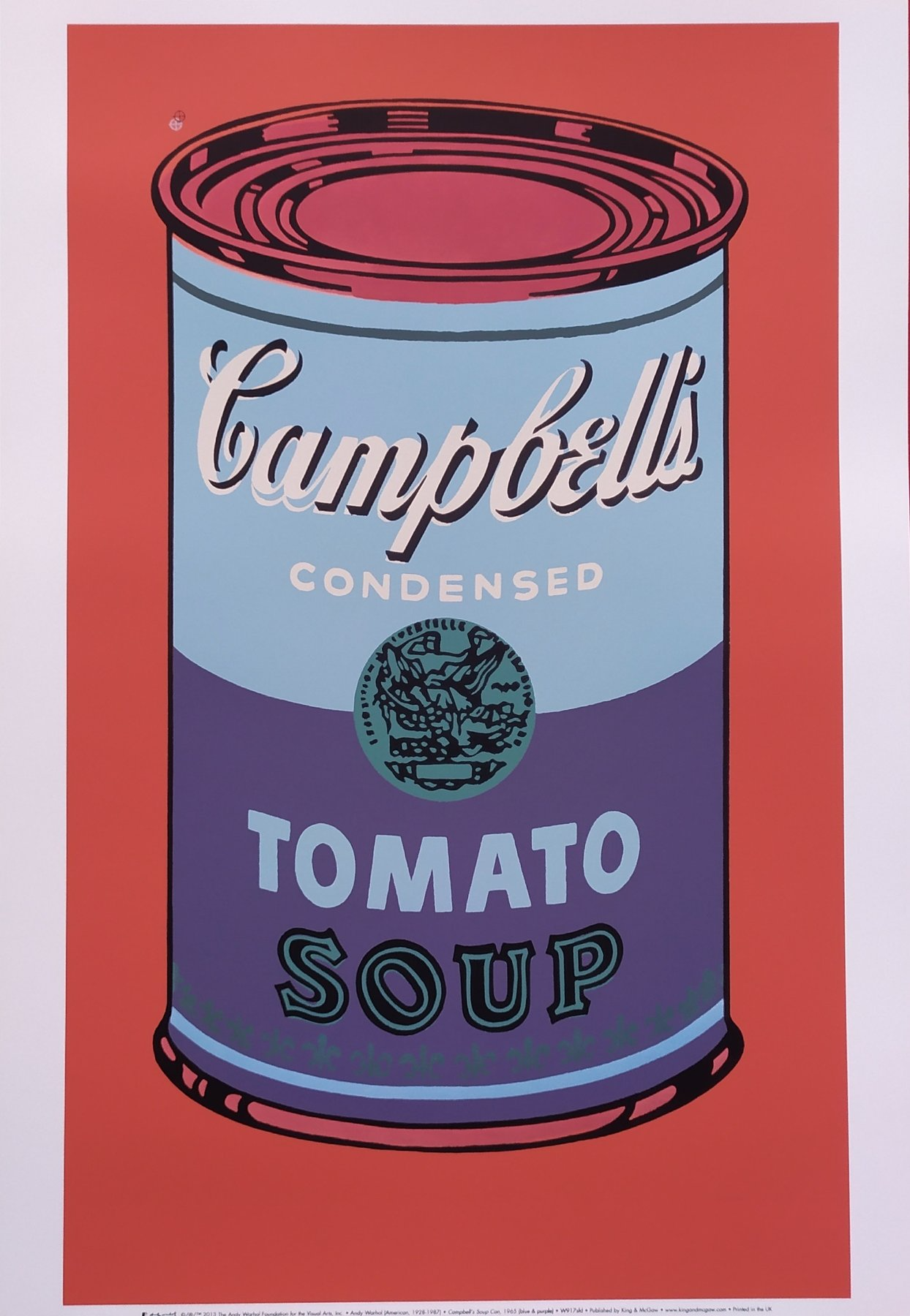
Set of four color variants: “Green and Purple”, “Green and Red”, “Pink and Red” and “Blue and Purple”.
Year: 2013
© The Andy Warhol Foundation for the Visual Arts, Inc.
Size of each: 33 x 48 cm.
Condition: excellent. Never framed, never exposed.
Few images in the history of modern and contemporary art have achieved the same level of global recognition as Andy Warhol’s Campbell’s Soup Can. First introduced in the early 1960s and continually reinterpreted throughout the decade, this motif became the ultimate symbol of Pop Art a movement that redefined the relationship between fine art and mass culture as radically as Pablo Picasso transformed figuration, Marcel Duchamp redefined the object, and Jackson Pollock reshaped the act of painting.
The four colour variants from 1965 belongs to the pivotal moment in which Warhol moved beyond the seriality of the original 1962 compositions and began exploring chromatic experimentation, turning a familiar supermarket product into a visual field of bold, flat and deliberately artificial colour. In doing so, he established a new aesthetic language that would influence not only his contemporaries including Roy Lichtenstein, Robert Indiana and James Rosenquist but also later generations of artists such as Jean-Michel Basquiat, Keith Haring, Damien Hirst and Takashi Murakami.
By isolating the Campbell’s label and repeating it in multiple palettes, Warhol transformed the logic of commercial printing into a sophisticated meditation on reproduction, consumerism and image saturation. The mechanical clarity of the composition, combined with the vibrant and unexpected colour harmonies, places these works in direct dialogue with the visual strategies of advertising, graphic design and fashion a cross-disciplinary approach that continues to define the contemporary art market and collectible culture.
Today, the Campbell’s Soup Can is not only one of the most recognisable icons of twentieth-century art but also a cornerstone of major museum collections worldwide, from The Museum of Modern Art in New York to The Tate and The Broad. Much like the most celebrated images by Claude Monet, Vincent van Gogh, Gustav Klimt or Henri Matisse, Warhol’s soup can transcends its original context to become a timeless emblem of modern visual culture.
The set of four colour variants amplifies this effect, introducing a rhythmic dialogue between repetition and variation that enhances its decorative power and makes it particularly sought after for contemporary interiors and Pop Art collections.
* Please note that the colors of the item may vary slightly from the images shown, due to the type of camera and lighting conditions used when photographing the piece, as well as the calibration or type of screen from which this website is viewed.
* For customers residing within the European Union: the price shown includes the Value Added Tax (VAT) applicable in the EU country of destination, in accordance with Royal Decree-Law 7/2021, of April 27, regarding the One-Stop Shop (OSS) regime for distance sales to end consumers in the EU.
*For customers residing outside the European Union/Customs Union, please, taking into account that the order will be subject to additional taxes, customs duties, or import charges upon arrival in the destination country, that we cannot calculate from Spain and must be covered by the buyer. They are typically handled by the courier or the local customs authority.
*All images contained on this website are the copyrighted property of Vereness or their respective copyright holders. All rights reserved.